Chiaroscuro Woodcuts
This project is investigating the collection of around 280 chiaroscuro woodcuts from the holdings of the Kunsthalle Bremen and their collector, Dr Hermann Melchior Segelken (1814–1885). The results of the project will be presented in 2027 in an exhibition and a comprehensive catalogue of the collection.
Woodcut is the oldest printing technique in the world. Initially produced only in black and white, a process was developed around 1500 that allowed motifs to be printed in colour. The so-called chiaroscuro woodcut (also known as Helldunkel-Holzschnitt in German; or Clair-obscur in French) allows for the use of two or more colours in a single work. These are printed one after the other and on top of one another using multiple woodblocks. This creates a motif composed of different layers and colours, thereby enabling a greater sense of depth. It is a rather sophisticated process of interweaving all the pictorial elements and surfaces, in which artists must anticipate, right from the start of cutting their woodblocks, how these – when printed sequentially in time and registered spatially – will result in a complementary and interwoven pictorial whole. Once the woodblocks have been cut, they can be used to print multiple colour variations of the same motif in large print runs. A distinctive feature is that the cream colour of the paper is used as a kind of highlight, contrasting with the rich, dark printing inks. The chiaroscuro woodcut takes its name from this contrast and the inclusion of light areas.
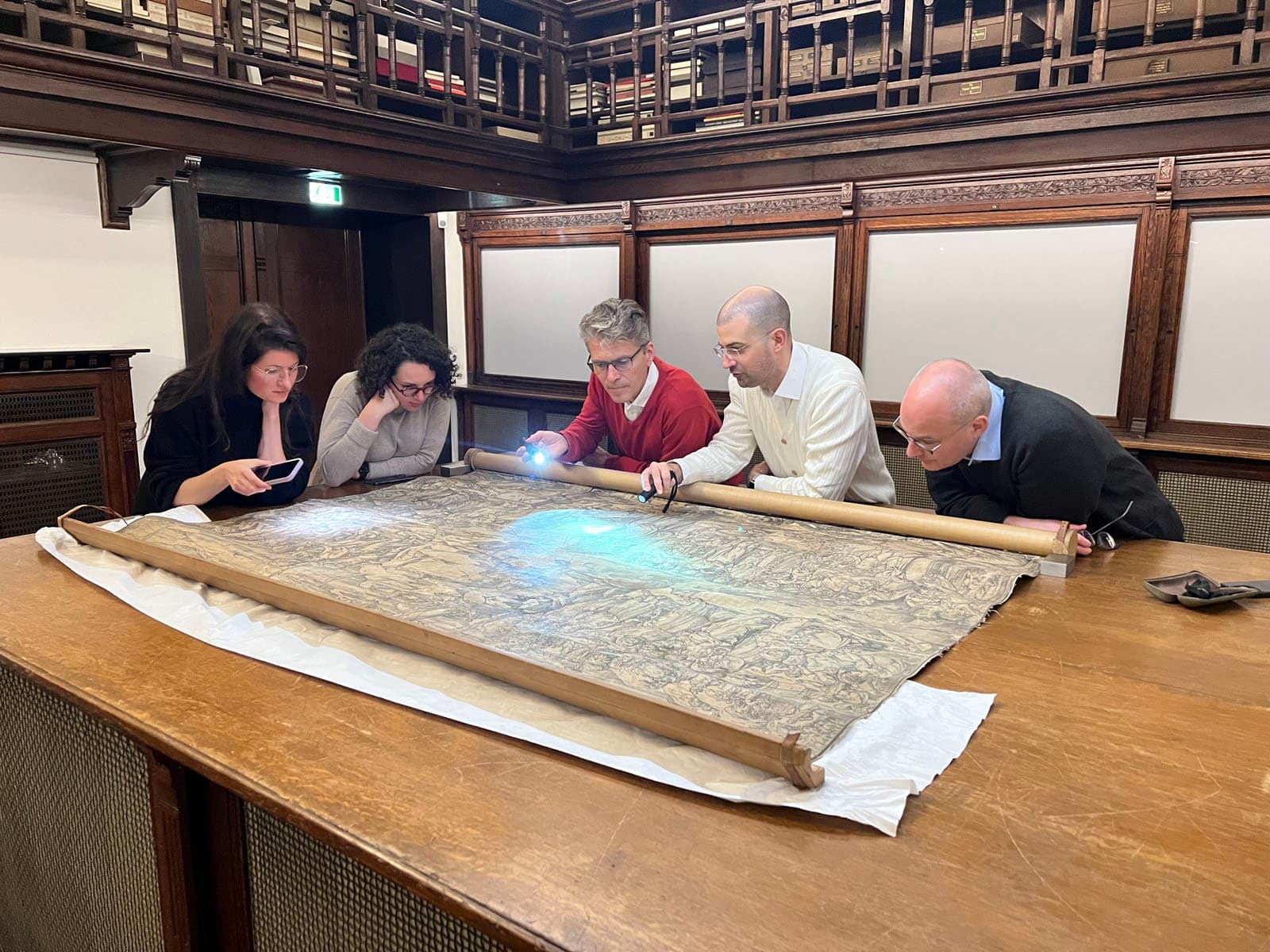
Workshop on chiaroscuro woodcuts held at the Kupferstichkabinett of the Kunsthalle Bremen, October 2025
The collection of the Kupferstichkabinett at the Kunstverein in Bremen comprises around 280 chiaroscuro woodcuts and is thus one of the largest collections of works created using this particular printing technique in a German museum. The Kunsthalle owes most of these works to one of its early 19th-century collectors and patrons, Dr Hermann Melchior Segelken (1814–1885). Segelken was not only a long-standing member of the Kunstverein’s executive committee; on his death, he also bequeathed to the Kunstverein his collection of prints, comprising some 2,300 sheets, as well as a manuscript devoted to woodcut printing in Italy and its evolution. Chiaroscuro woodcuts occupy a special place in his writings and his collection.
This research project examines Segelken’s collection of chiaroscuro woodcuts, his three-volume manuscript entitled Die Holzschneidekunst in Italien. Von der Mitte des fünfzehnten bis zum Ende des achtzehnten Jahrhunderts (The Woodcut in Italy: From the Mid-Fifteenth to the End of the Eighteenth Century), and Segelken’s role as a collector of woodcuts in Bremen during the second half of the 19th century. As part of the project, a comprehensive collection catalogue is also being produced, which will publish the chiaroscuro woodcuts from Bremen’s Kupferstichkabinett in digital and printed form for the first time. The catalogue will also present the latest findings in the field of art-historical research into the technique of the chiaroscuro woodcut in general.
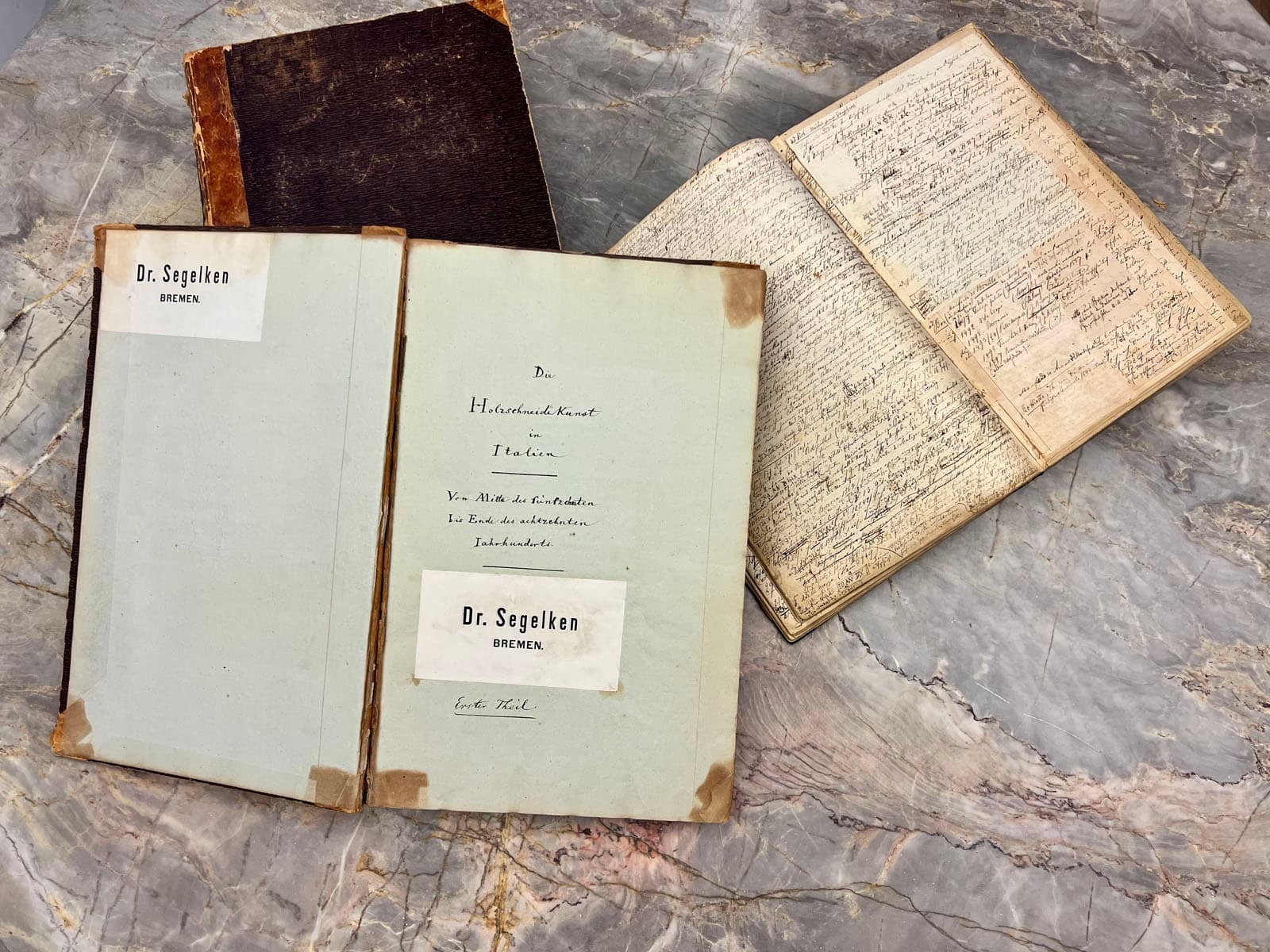
Manuscript (open on the right) and fair copy (in three volumes, on the left) of Dr Segelken’s Die Holzschneidekunst in Italien. Von der Mitte des fünfzehnten bis zum Ende des achtzehnten Jahrhunderts, before 1885, Kunsthalle Bremen – Der Kunstverein in Bremen, Archive
In preparation for a major exhibition (opening April 2027) and the catalogue, a two-day workshop was held in 2025 with experts in the field of the graphic arts, which enabled an initial exchange of ideas and, above all, the identification of research gaps that the planned exhibition and catalogue will address.
The exhibition presents a selection of 120 of the approximately 280 chiaroscuro woodcuts held in the collection today. To date, barely 2 per cent of these works have ever been shown in exhibitions, which now necessitates a significantly increased conservation effort. A dedicated conservation project is being carried out specifically for these valuable holdings.
In addition to the Chiaroscuro woodcuts themselves, Hermann Melchior Segelken’s manuscript – an unpublished catalogue and a treatise on the history of Italian woodcut – will also be digitised and transcribed for the first time.
Through this extensive project, the Kunsthalle Bremen aims to honour its extensive collection of chiaroscuro woodcuts and the collector Hermann Melchior Segelken in a manner befitting their significance, and to present them to the public.
More aboutResearch
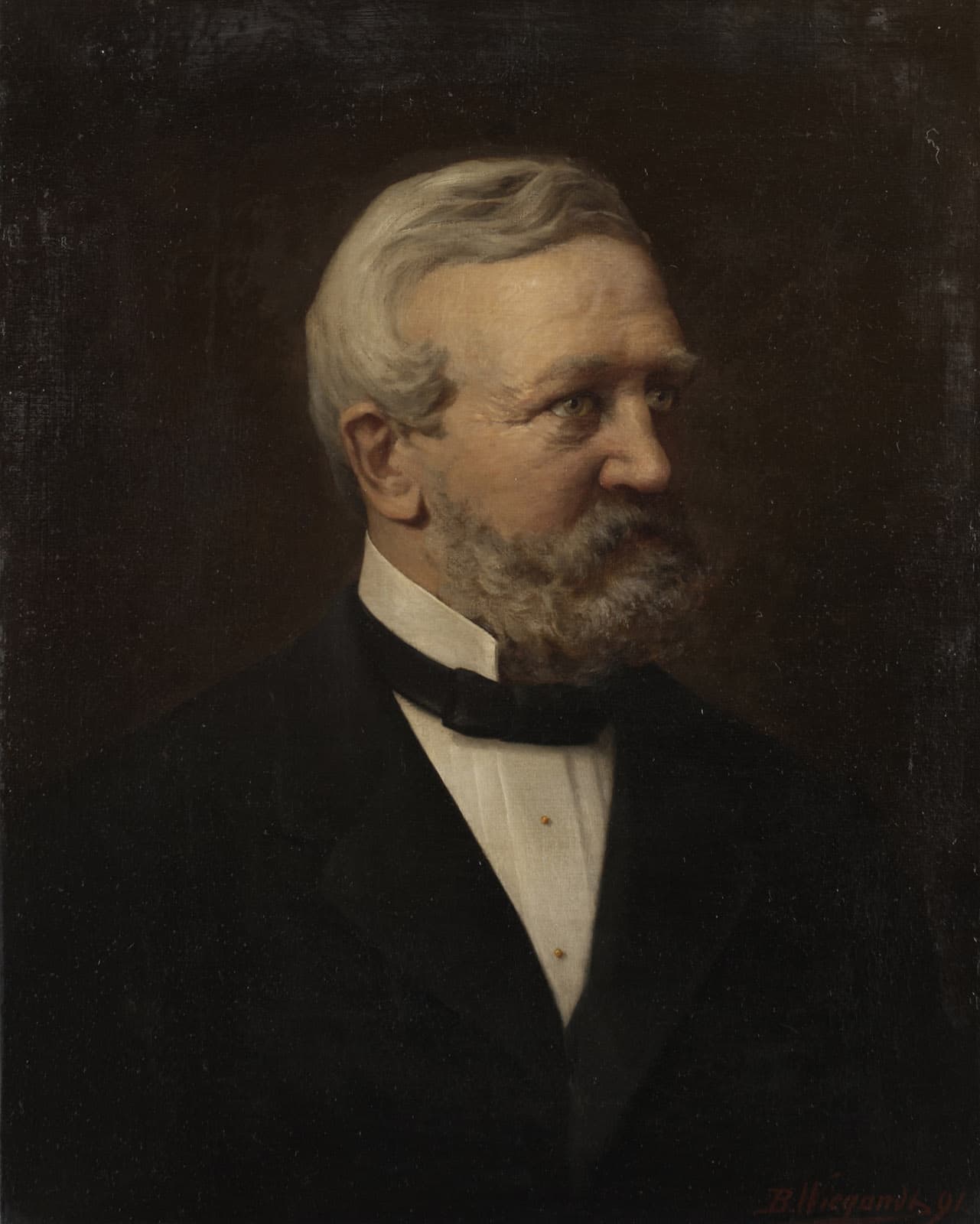
Bernard Wiegand, Portrait of Dr. med. Hermann Melchior Segelken, 1891
Oil on canvas, Kunsthalle Bremen – Der Kunstverein in Bremen
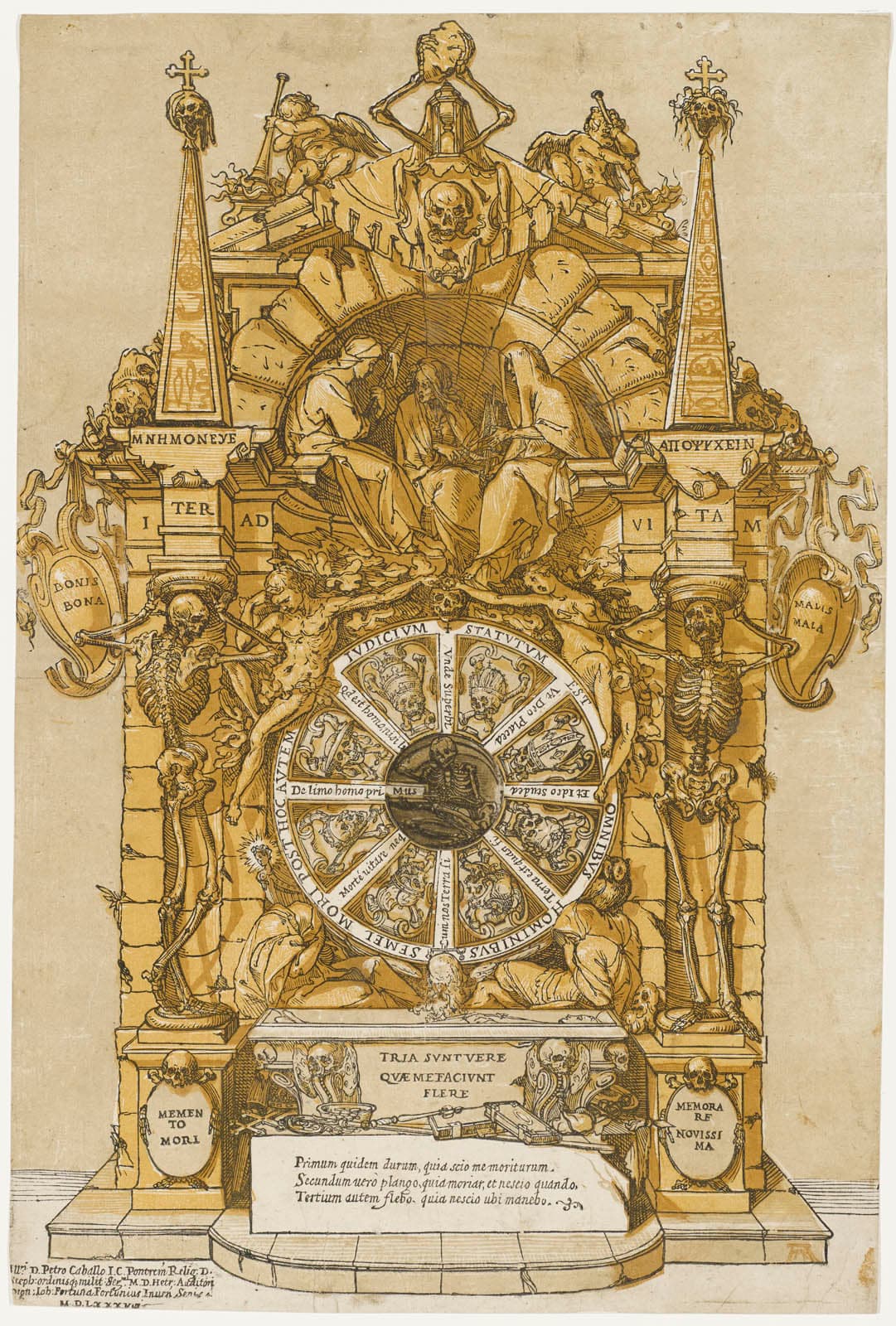
Andrea Andreani, An Allegory of Death, 1588
Chiaroscuro woodcut from four blocks in three shades of yellow and black (centre printed separately), Kunsthalle Bremen – Der Kunstverein in Bremen